FACTOIDS & TRIVIA
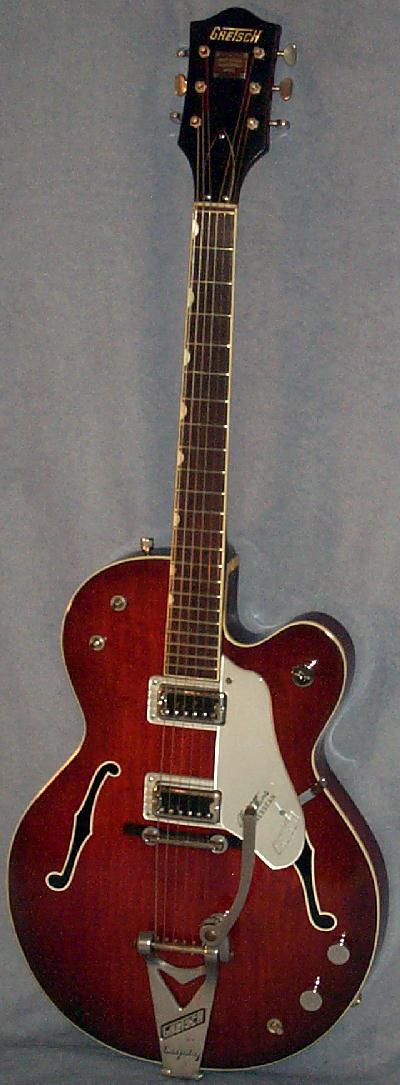
In 1954, Gretsch scored a major endorsement from fingerpicker Chet Atkins and the company began to make its mark on the industry with its electric archtops, especially the Chet Atkins series. Chet was always looking for ways to increase sustain while reducing feedback and the Chet Atkins series evolved to address his concerns. Ideally, Chet wanted a solid block of wood running down the middle of his electric archtops (which Gibson did in 1958 on the ES-335 model), but Gretsch refused. Some of the changes that were made, however, included the switch to humbucking pickups to reduce electronic noise, a metal nut and zero fret to enhance sustain, and the "Electrotone" body which was about 3/4" thinner than previous models and lacked F-holes to reduce feedback. The model 6119 Tennessean was the budget guitar in the Atkins line which made it especially due to George Harrison's use of it in the Beatles' movie "Help!". The Electrotone body Tennessean was made from 1962 until 1972. Note that the painted on F-holes are different from the oversize F-holes usually associated with Gretsch. Mr. Atkins did not like the large F-holes and he gave the Gretsch designers a tracing of the F-holes from his D'Angelico archtop to use as a pattern on the Electrotone body models.
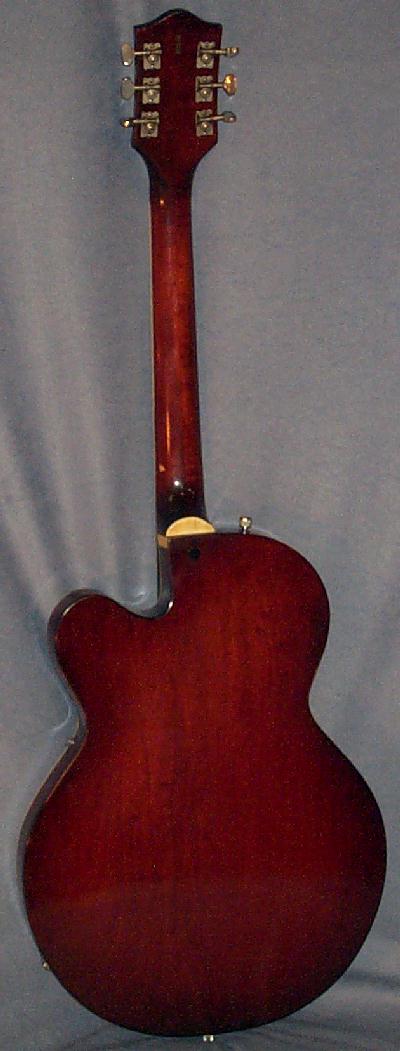
GRETSCH CHET ATKINS TENNESSEAN 6119 (August 1966)
Body: Hollow; laminated 1-piece
maple top, laminated 2-piece maple back and laminated maple
sides; single bound top, unbound back
Finish: Cherry Red (faded to mahogany), nitrocellulose lacquer
Neck: 3-piece maple/mahogany, set-in; lacquered maple headstock overlay with pearloid logo and metal nameplate
Fingerboard: Indian rosewood, single bound; pearloid "Neo-classic" markers
Number of Frets: 22
Pickguard: Acrylic
Bridge: Gretsch chrome steel bar on ebony base with Gretsch/Bigsby tailpiece
Nut: Plastic with zero fret
Tuners: Van Ghent, open, chrome
Pickups: Two, Gretsch Hi-Lo 'Tron single coil with adjustable pole pieces, chrome
Controls: Master volume, volume control for each pickup, 3-way tone selector, standby switch, 3-way pickup selector
Scale Length: 24 1/2 inches
Neck Width at Nut: 1 11/16 inches
Body Width at Lower Bout: 15 1/2 inches
Body Depth: 2 inches
Weight: n/a